Can We Still Read Photographs?
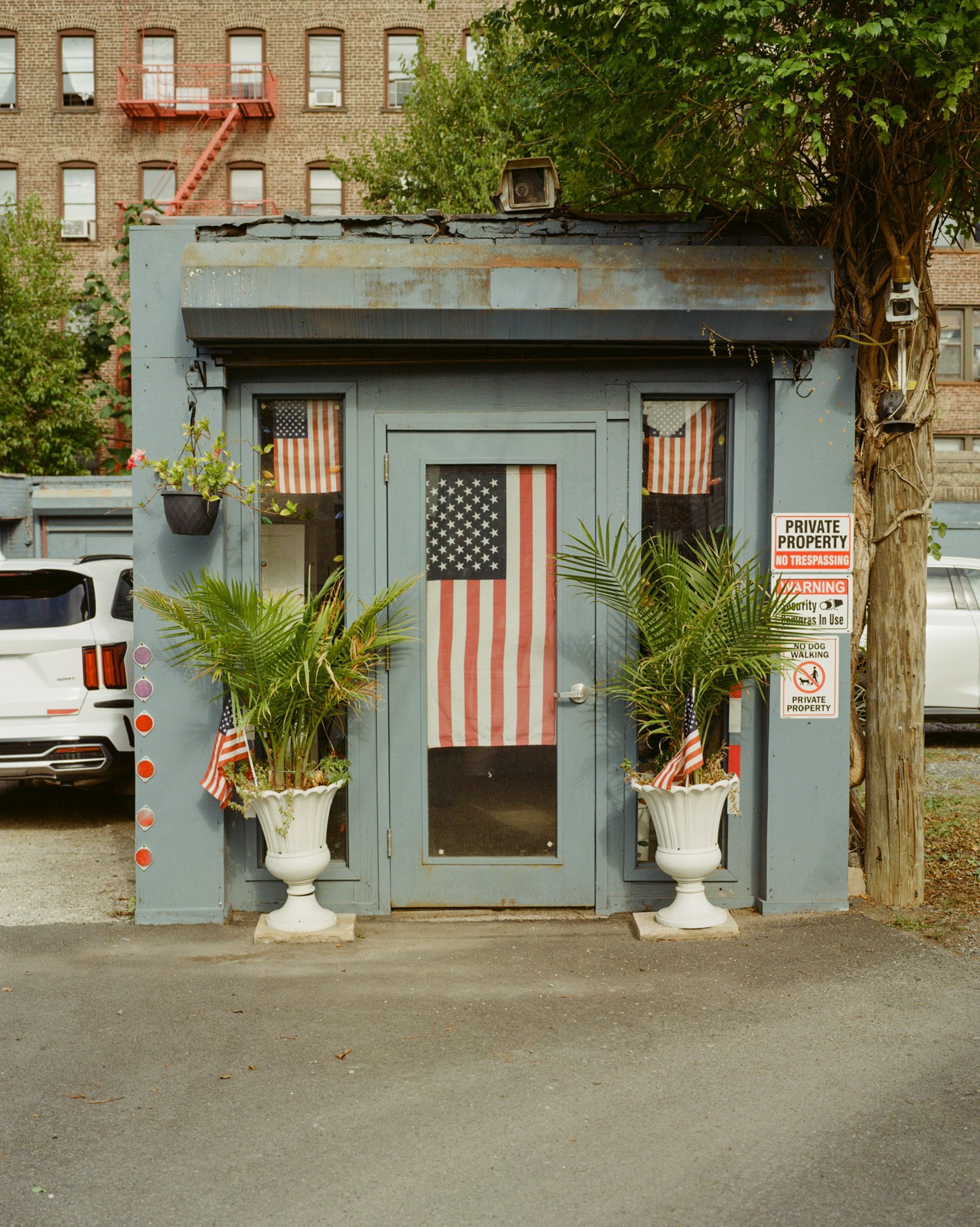
Jones Place and Vroom Street, Journal Square - Jersey City, NJ - October 2025
Our visual literacy skills are fading, quickly.
Most of us scroll past hundreds, even thousands of images and videos a day. Roughly 63% of the world uses social media, which trains us to treat images like snacks. Scroll, view, enagage, repeat.
Visual literacy is fading as we continue to skim headlines and glance at images. By definition, visual literacy is the ability to interpret, evaluate and create images, and to understand their context, power, and ethics inside and outside of the frame.* Researchers who study visual literacy in students find the same: they are really good at consuming content, but deeper interpretation and the ability to read images is lacking. As we slow down and reset before the new year, I thought it would be useful to do the opposite of the feed: pause on one photograph and read it together.
“There is a real need for intensifying the efforts in visual literacy education, especially given that, within an environment flooded with visual media, students are beginning to view images as transitory objects without authors and rights.” **
Let’s prevent atrophy of our visual literacy muscles through an exercise that focuses on a single image.
How many images do we see in a day?
Quick mathematics:***
Average social media time: 2.5 hours/day
2.5 hours ≈ 9,000 seconds.
9,000 seconds ÷ 5 seconds ≈ 1,800 distinct posts/images a day.
Even if you cut that in half to account for breaks and repeats, you’re still looking at hundreds of images a day, mostly on your phone.
Let’s Read One Image Together
Fight the power of the feed. Lets take at least 10 seconds and look at the photo above before you read on.
-
American flags?
Private Property/ No Trespassing signs?
Plants?
Fire escape?
Whatever your eyes dart to first is already shaping how you read the frame.
-
Small blue guard booth, dead center
Large flag on the door
Two white urns with palms and mini flags
Hanging plant, row of colored reflectors on the left
Stack of warning signs and a camera on the right
Cars cropped on both sides
Brick building and fire escape behind everything
Most of us don’t notice half of this on the first pass. That’s what “glossing over” looks like.
-
Ask yourself:
Does this feel more welcoming or protective?
If you cover the signs with your hand, does the feeling change?
If you ignore the flags and only look at plants and colors, what kind of place is this?
Small details shift the mood more than we think.
-
Cut through the noise to find meaning:
Flags → freedom, belonging, “we the people”
Signs → rules, limits, “keep out”
Plants and white pots → trying to look classy or formal
Cameras → watching, suspicion
-
Your read isn’t neutral.
If property lines have been used against you, this may feel like a threat.
If flags feel safe to you, this might read as a cozy, patriotic corner.
If you’ve worked security, it might just look normal and practical.
Visual literacy is partly about catching your own bias as you look. It’s also what makes everyones perspective unique.
One possible perspective (mine)
I see a mini border crossing in a parking lot. Flags and signs overconfidently screaming “WE MUST PROTECT THIS HOUSE”. Flags say we, but cameras say not you. Plants try to soften the blow, but it mostly illustrates my views on today’s political climate.
* ACRL Visual Literacy Competency Standards for Higher Education – American Library Association
** Example: Association of College & Research Libraries study on visual literacy and student work
***According to research by Global WebIndex, 63.9% of the world's population uses social media. The average daily usage is 2 hours and 21 minutes (February 2025).
More context if you need it.
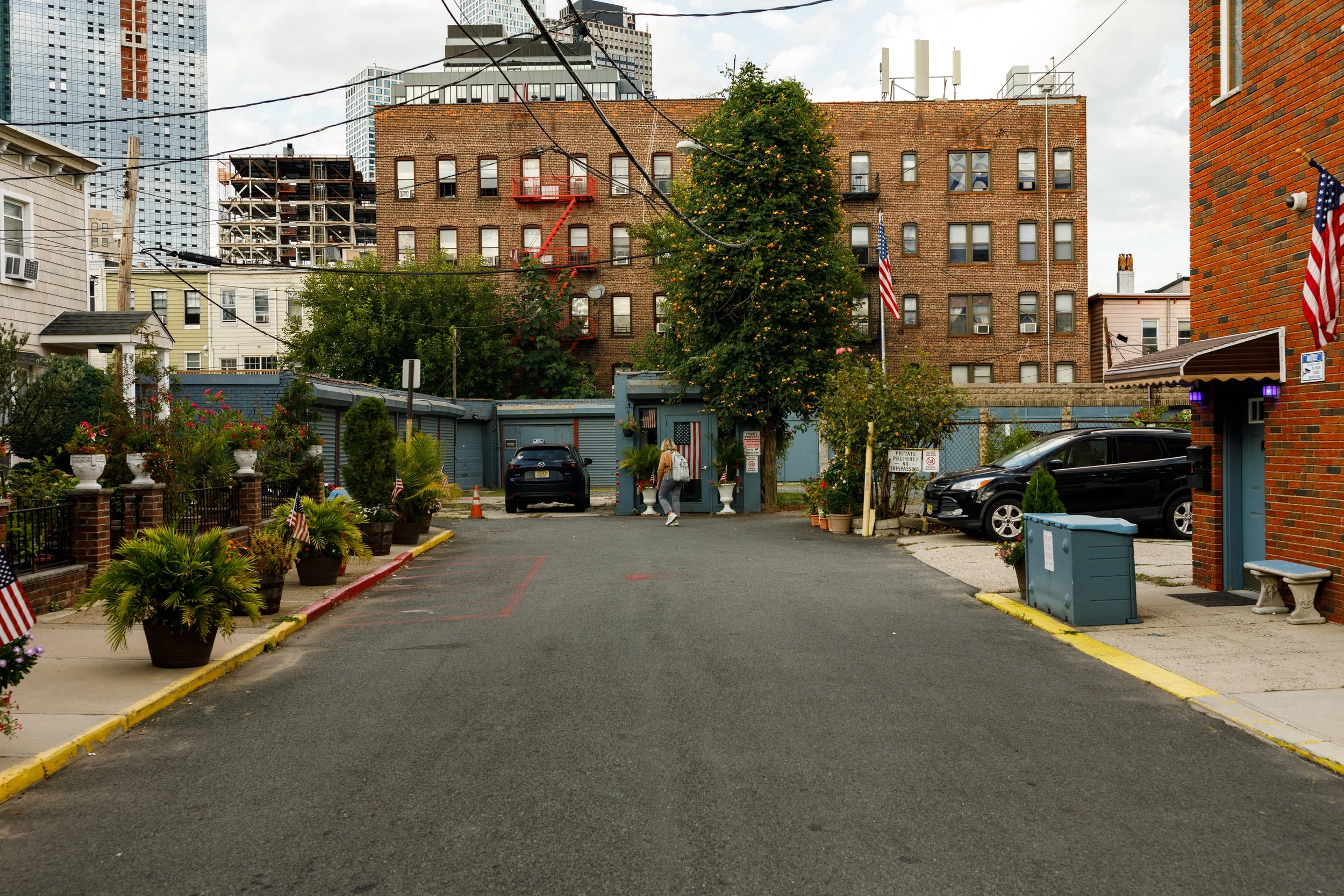
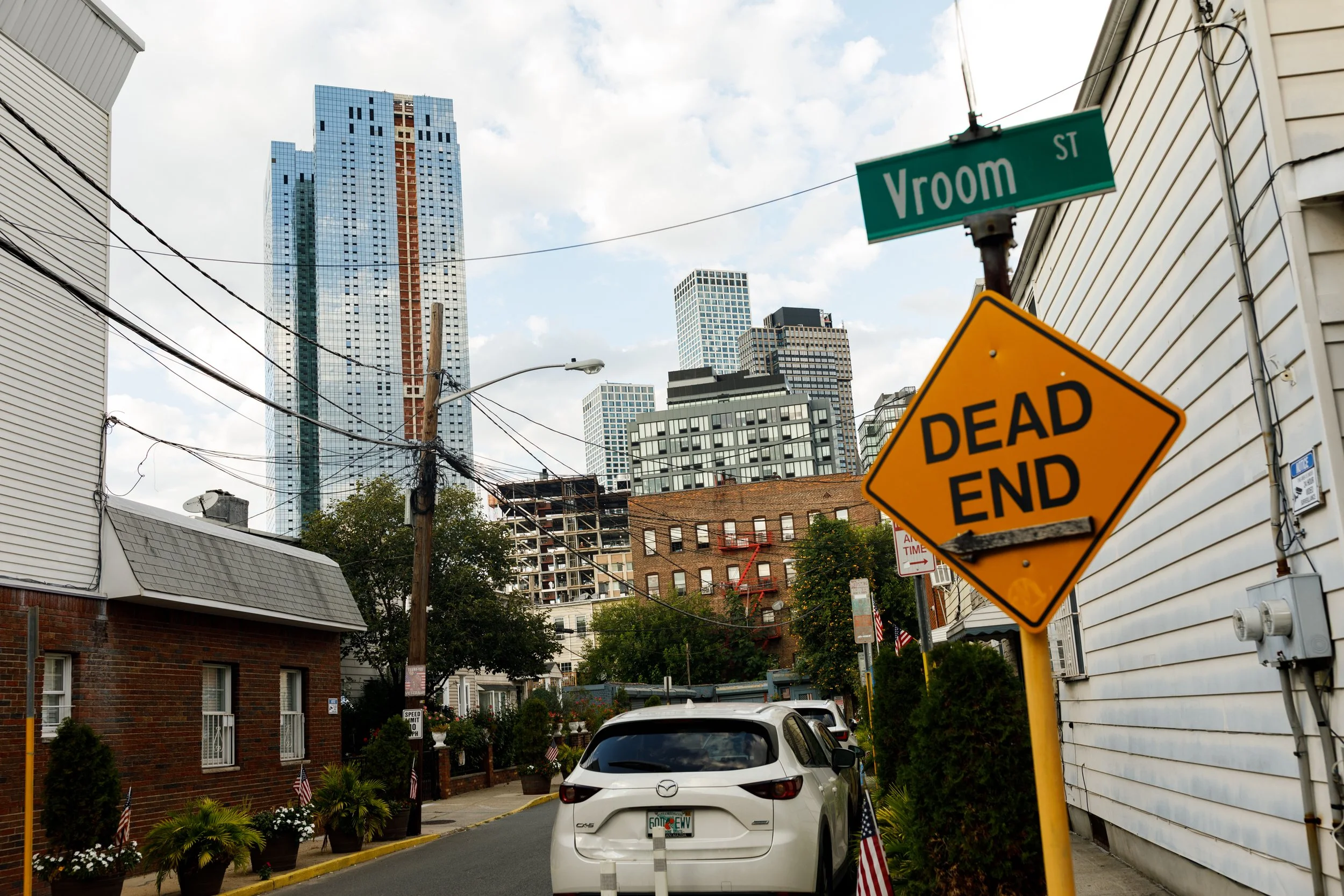
Jones Place and Vroom Street is a quiet dead end street in the Journal Square neighborhood off Jersey City. The two images show the full block looking back at the booth and towering buildings behind.